47 of 59 words fell. What rose was almost entirely the names of shops
Every Korean search word this site follows was set against the same month a year earlier. Whatever the field, it was down. Of the 12 words that rose, 10 were the name of a shop or an app. In Korea, the names of things are being searched less.
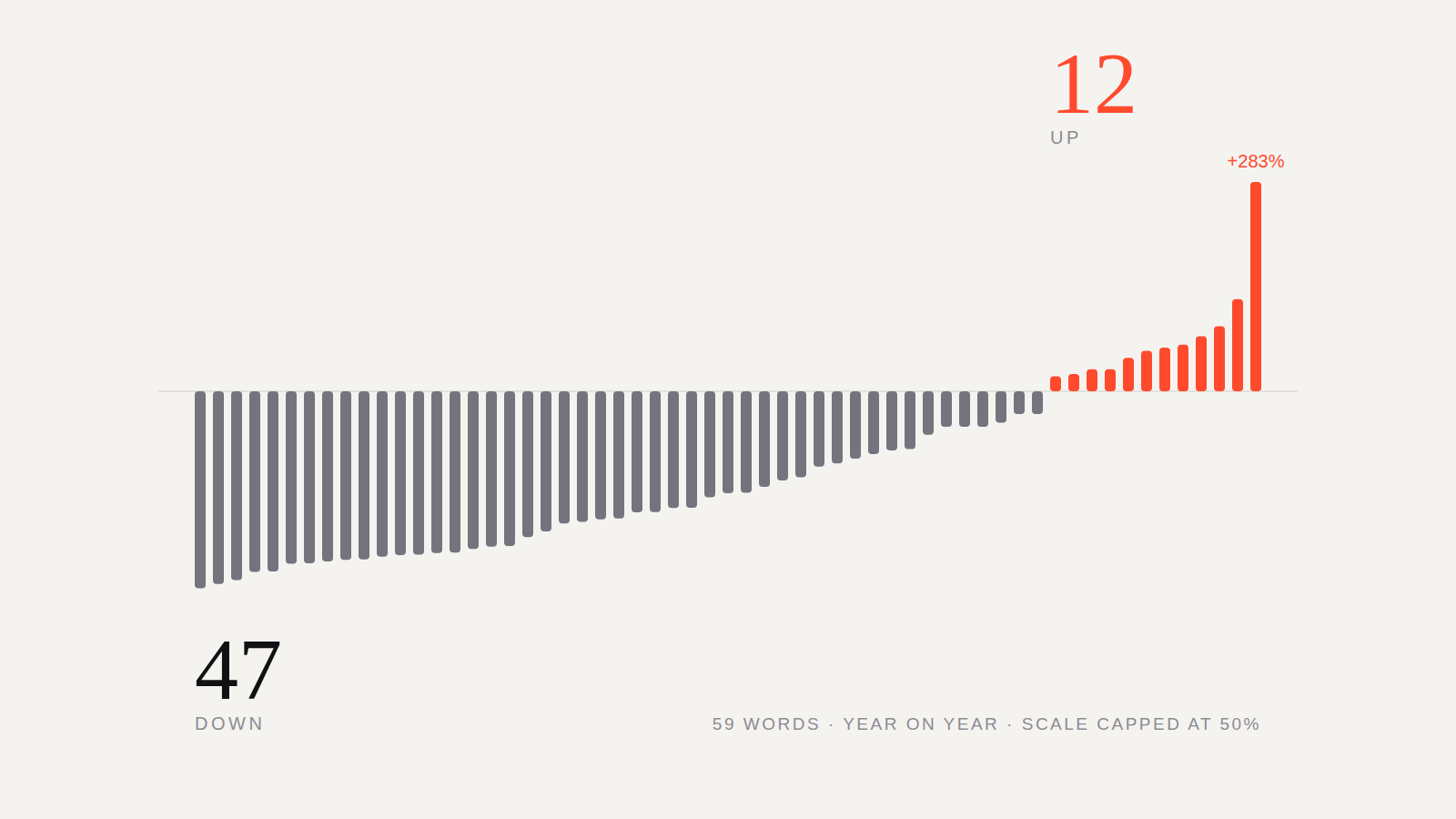
Korean search words are collected every day in fixed sets: neighbourhoods, cosmetics, food, desserts, clothing, culture, and the names of shops. Set all of them against the same month a year earlier, and 47 of the 59 words that could be compared had fallen. The median was down 24%.
Twelve rose. Ten of the twelve were the name of a shop or an app. The sets were not picked to produce that split; they were fixed months before this comparison was run.
The count runs month against the same month
Search volume is taken day by day and averaged by month. To take the season out, January 2025 goes against January 2026 and February against February, through to August. Only words with at least six of those eight months were counted. Words that were near zero a year ago were dropped, because the division stops meaning anything.
On this method a seasonal product and a brand-new word land on the same scale. Down jackets rising in winter changes nothing in the result, because last winter is being compared with this winter.
The sets matter as much as the method. Each set is collected in one request, which is the only way these figures can be compared at all: inside a single request the highest point becomes 100 and everything else is scaled to it. A year-on-year change stays inside one word's own series, so it comes through that scaling intact.
Every field fell, by a similar amount
This is not one field in trouble. All seven move the same way, by roughly the same amount. Word by word: exhibitions down 41%, Hannam-dong down 41%, pores down 41%, wedding-guest outfits down 39%.
A median is not an average. Half the words inside each field moved more than the figure shown and half moved less, and none of these lines says anything about a particular word on its own.
Subjects covered on this site are no exception. Seongsu-dong was written up here in April as having grown 1.4 times in three months; against the same month a year earlier it is down 14%. Rising over a short window and being smaller than last year can both be true at once.
Here are all twelve words that rose
Listing the ones that fell serves nothing, so here is every word that rose. There are only twelve.
Daiso, 29CM, Queenit, Zigzag, Musinsa, Coupang. Shops and apps. “Daiso's nails”, “Daiso's new items” and “new convenience-store items” are a shop name with one word attached; what is being looked for is the shop floor itself.
The other two are the crunching sounds 아그작 and 와그작, which came out of this year's 왁뿌 — a thick slab of chocolate broken up and eaten. Take those two out and everything that rose is the name of a place to buy.
“NAVER is shrinking” does not account for it
The first thing to suspect is the measuring place itself. If younger Koreans are leaving NAVER for Google and social platforms, then everything measured on NAVER falls at once.
But in that case shop names would have to fall with the rest, since they are measured in the same place over the same period. They did not. Daiso is up 22% and 29CM up 16%. What is down is the names of things and concepts; the names of shops are up.
So what stopped is not searching. It is searching by the name of the thing.
The same words are still first on video
The interest itself has not gone, and that can be checked. Korean-language videos were collected on the same day and the words appearing in their titles counted.
가을 코디 (autumn outfits), down 33% in search, comes first in video titles. 데일리룩 (everyday outfits), down 39%, is still near the top. People have not stopped looking at what to wear in autumn. They are looking at it on video rather than in a search box.
The two sides are not measured the same way, so a count of titles cannot be set against a search figure as a ratio. What it shows is presence. The words that are draining out of the search box are the words filling the titles.
The search box has changed jobs
Put the numbers together and the shape of what is happening is fairly clear.
- Things get found on video and social. The words in the titles are the evidence
- Buying happens inside an app, so the search box only gets the name of the shop
- The step of typing 원피스 (dress) and comparing what comes back is being skipped entirely
The search box went from a place to look for things to a place to open apps. Item-name searches falling while shop-name searches rise reads as that change of order, showing up directly in the figures.
None of that says the shopping got smaller. It says the place where the decision happens has moved, and the search box now sits after the decision rather than before it.
Not every shop name rose
Olive Young was down 10% and Ably down 5%.
For Olive Young, Daiso was up 22% over the same period. Where cosmetics get bought is itself in motion, and those two do not move in the same direction. Ably's 5% is small enough that nothing should be read from it.
Two shop names falling is also enough to keep this from being a rule. What the list of twelve shows is a tendency, and a tendency is something to check the next word against rather than something to apply.
What this changes for anyone tracking Korea
Following Korean consumption on search volume alone gets harder every year, and these figures are a stage in that. If fewer people search the names of things, the rise and fall of search volume stops describing the size of a trend.
That is why this site reads video posts and view counts, NAVER shopping click volume and its age breakdown, and Google's rising searches alongside search volume. When one instrument stops working, another one covers the gap.
A falling word used to be a safe sign that interest had gone. It is not one now, and the error always runs the same way: things look deader than they are.
Laying the search line over the transaction line
All of the above is about how much was searched. How much was bought is a different number, and the two can point opposite ways — Daiso's cosmetics did exactly that. Search halved while the money spent went up.
So one question is left. Was less bought, in proportion to the searching that disappeared? Or did only the way of buying change?
Work is under way to bring in the monthly online transaction figures published by Statistics Korea: how much clothing was bought, and how much of that came from a phone. Lay the search line over the transaction line and the answer is visible at a glance.
The continuation goes out as soon as those figures are in.
From the desk. If you want to know what is current in Korea, reading the top of the search rankings works less well every year. Fewer people search by the name of a thing, so what stays at the top is whatever settled in last year.
The faster route is to start from the names of shops and apps. 다이소, 무신사, 29CM, 지그재그. Search video with those four and what is on the shelf right now comes straight out. Search by item — 원피스, 니트 — and you land on last year's articles.
All twelve of the words that rose point the same way. Change the word you search from the thing to the place that sells it. That is the most usable conclusion two years of these numbers produce.
Sources
Read next
Related
Seongsu-dong is still four times ahead, and still sinking
The Seoul neighbourhoods that get named as the place to be right now, measured on one scale over two years. 성수동 (Seongsu-dong) leads the second place by nearly four times, unchanged. Its own search volume, though, is down 45% in two years.
A bread you cannot buy in Korea. What is being sold is not the taste
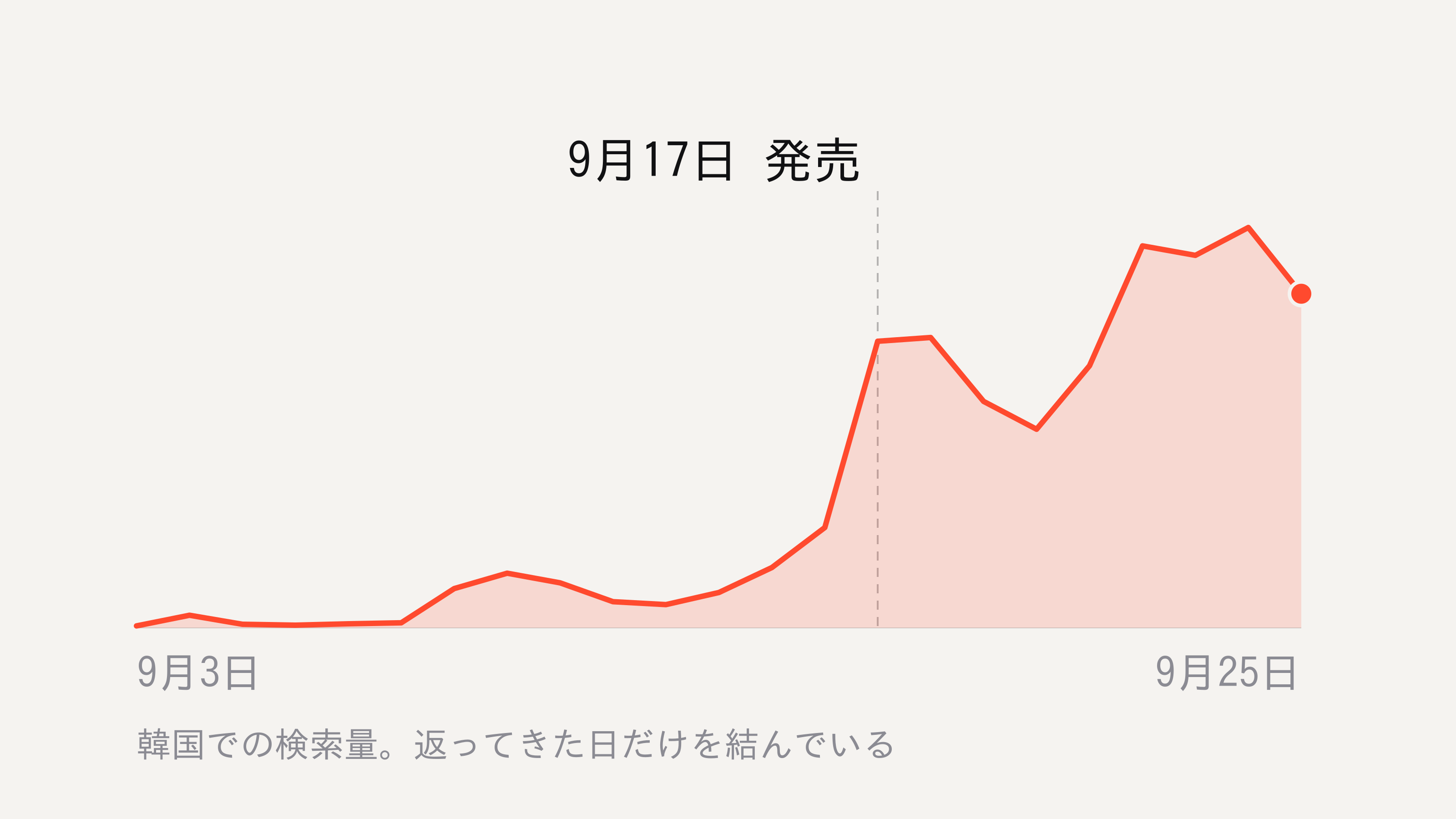
Searches for the collaboration bread CU released on September 17 were still pointing up on the Korean side through September 25. On the two days when three of the four other words in the same request fell, this one rose 51.5%. The product name gets searched; the photocard gets written about.
“홈카페” stepped up. On the same date, not one of the tools did
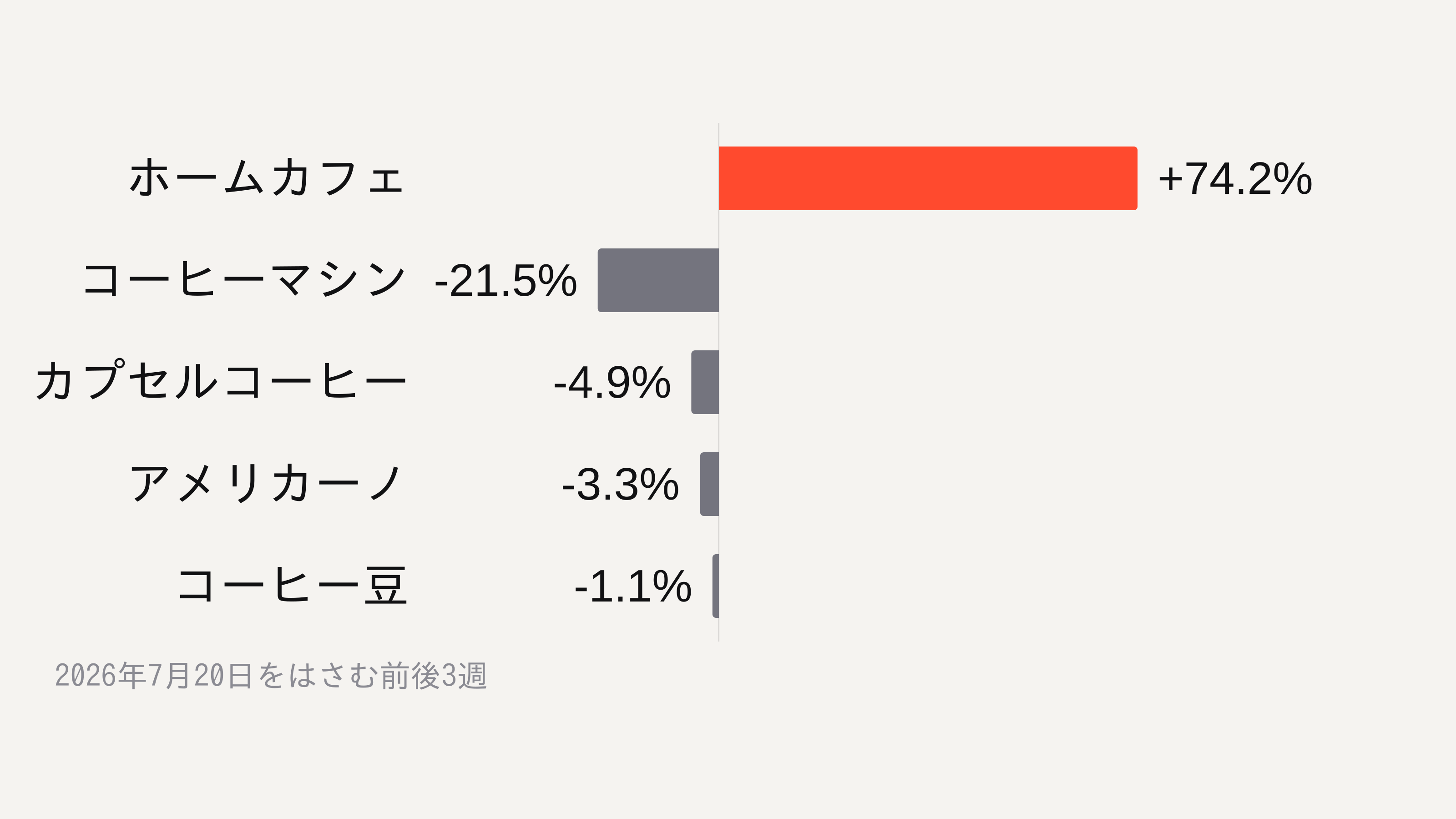
The Korean word 홈카페 moved up a level on July 20, 2026, and 68 days later it has not come back down. Across that same date, not one machine, capsule or bean rose with it. What moved was the word.