Seongsu-dong is still four times ahead, and still sinking
The Seoul neighbourhoods that get named as the place to be right now, measured on one scale over two years. 성수동 (Seongsu-dong) leads the second place by nearly four times, unchanged. Its own search volume, though, is down 45% in two years.
Which part of Seoul is the part right now has been rewritten several times in five years. Garosu-gil, then Yeonnam-dong, then Euljiro, then Hannam-dong, then Seongsu-dong. Guides in most languages tell the story as that sequence of handovers.
We measured two years of actual search volume, all five on one scale. The answer is that no handover happened. 성수동 (Seongsu-dong) was four times clear of second place two years ago and still is. What has changed is that Seongsu-dong's own search volume is down 45%.
What Seongsu-dong was before it was a destination
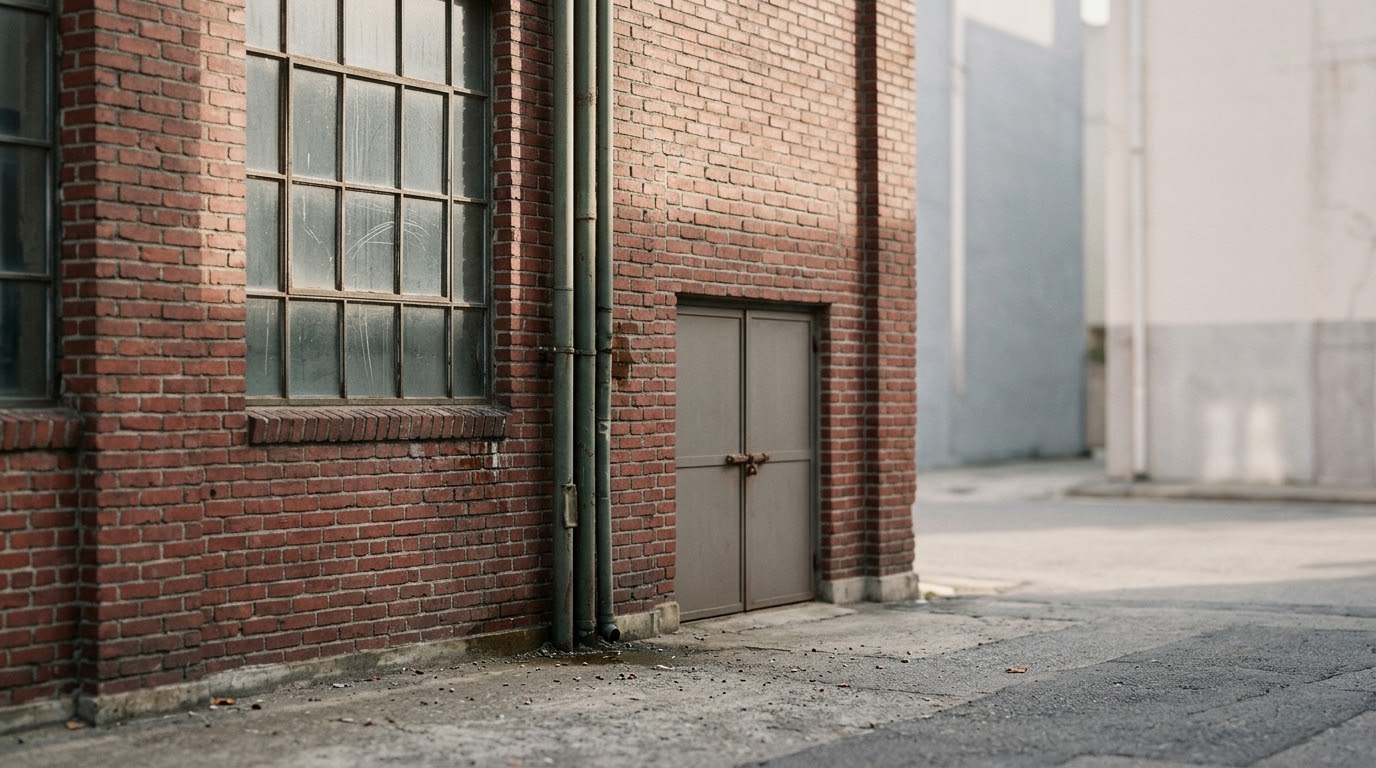
It is a district in eastern Seoul, on the north bank of the Han River. It was a shoemaking, printing and metalworking quarter. Factories gathered there from the 1960s into the 1970s; from the 1990s the empty ones piled up.
That is why the red brick and the high ceilings are still there. Most of the buildings now used as cafés and showrooms are sitting inside the frame of the original factory.
From the mid-2010s, studios and galleries moved in for the cheap rent and the ceiling height. Brand pop-up stores followed, because warehouse space suits a show that only has to last a fortnight. Corporate moves — SM Entertainment, Musinsa — came after that, not before.
So it is a district where one use replaced another on the same footprint. Not built by redevelopment; re-occupied. The brick survives not because anyone preserved it but because nobody had a reason to knock it down.
That sequence explains the thing visitors notice first. Retail streets built as retail put the shop window at the front; a factory puts a loading door at the front and the space behind it. Seongsu-dong inherited the second layout, which is why so much of it is invisible from the pavement.
By search volume, the order has not moved
Seongsu-dong at 9.8, the chasing group at 2.5 to 2.7. A gap of 3.6 times. And that multiple is almost exactly what it was two years ago: in September 2024 it was Seongsu-dong 17.9 against Yeonnam-dong 5.0, again 3.6 times.
Not one position changed in two years. Euljiro, the name most often floated as the next one, has gone from 4.1 to 2.7. It is not closing.
Two years is long enough for a handover to at least begin showing. Yeonnam-dong and Euljiro both had their turn as the name being written up, and neither converted that coverage into a position on this chart. Whatever decides which district leads, it is slower than the cycle of articles about it.
All five are sinking
Nothing was eaten by anything else. The act of searching for a district by name is what shrank.
This is not confined to places. Of the 59 words this site tracks, 47 are down year on year, and nearly everything that rose was the name of a shop or an app. Place names sit on the side of things-and-places, and that whole side is thinning.
Fewer searches is not fewer people
This part needs care. Search volume is the number of times a word was typed, not the number of people who walked through. Once you know where you are going, you stop looking it up.
Over the same two years, searches for Daiso rose 22%. Names of places to buy went up; names of places and product categories went down. The shape fits “people stopped looking up the district before leaving” better than it fits “people stopped going.” What a map app settles, nobody types into a search box.
Recommendation feeds push the same way. When the next place to go arrives as a video in a feed, with the location already tagged, the district name never has to be typed at all. The step that disappears is the search, not the trip.
None of which proves footfall held up. It only means the fall in a district's search volume cannot be read as a fall in visitors without something else to check it against — which is why the numbers below come from outside search.
On video, what gets watched is not the district but what happened there
Outside search, the same week: new YouTube uploads collected across nine entry words. 성수동 returned three videos, 133,000 views between them.
성수동에서 생애 첫 명품 쇼핑 후 달라진 이경규의 패션 감각은? (After his first-ever luxury shopping trip in Seongsu-dong, how has Lee Kyung-kyu's sense of style changed?)
From YouTube, entry word 성수동. 67,000 views over the last seven days.
Neither of the top two is about the district itself. One is a TV personality shopping there. The other is an actress appearing at a cosmetics brand's photocall held there, at 58,000 views. The third video is finally about the place — a handmade shoe workshop — at 7,812 views.
In blog titles, the district turns up as a venue
The same week, words were also pulled from new blog post titles, keeping only those absent from the previous collection. Around 성수동, this is what came up.
- 판로 (sales channels)
- 중소 / 중소기업 (small and mid-sized firms)
- 제조사 (manufacturers)
- 온리페스타 / 나가노마켓 (names of trade events)
Not cafés, not galleries. The district name is appearing in the context of trade fairs where smaller manufacturers look for buyers. A place that filled up after the factories left is now filling with people looking for somewhere to sell.
That follows from the buildings as much as from the fashion. Wide floors and high ceilings suit something that only has to exist for a week, and in a district people already walk through, the audience arrives without being invited. Brand pop-ups worked that out first; the trade events are using the same property of the place.
Search halved, but there is no sign that fewer things are being staged there. What fell is the number of times anyone typed 성수동 to find out. The district is drifting from destination to venue — though one week of observation is not enough to say that flatly.
As for Seongsu-dong itself: down 45%, and still 3.6 times clear of second. Nothing has threatened that position in these two years.
Putting the district name next to the shop names
The open question is whether this sinking is falling interest or a changed habit of looking things up. Put the district-name searches next to searches for the shops inside the district and the two separate. If the shop names hold up, what dropped was the procedure, not the interest.
We are picking a handful of Seongsu-dong shops and starting to track them on the same scale. Next time this district comes up, both lines go on the same chart.
From the desk. If Seongsu-dong is on your list, now may be the better time to go. Half the search volume of two years ago means fewer people planning the same route, and on a weekday afternoon the number of places you can walk straight into has gone up.
Given what the district is, you also do not need a fixed destination. Because it was built for factories, the street-facing entrances are small and the interiors are tall, so you cannot see in from outside and you do not know what a place is until you open the door. Not many parts of Seoul can be walked that way.
Sources
Read next
Related
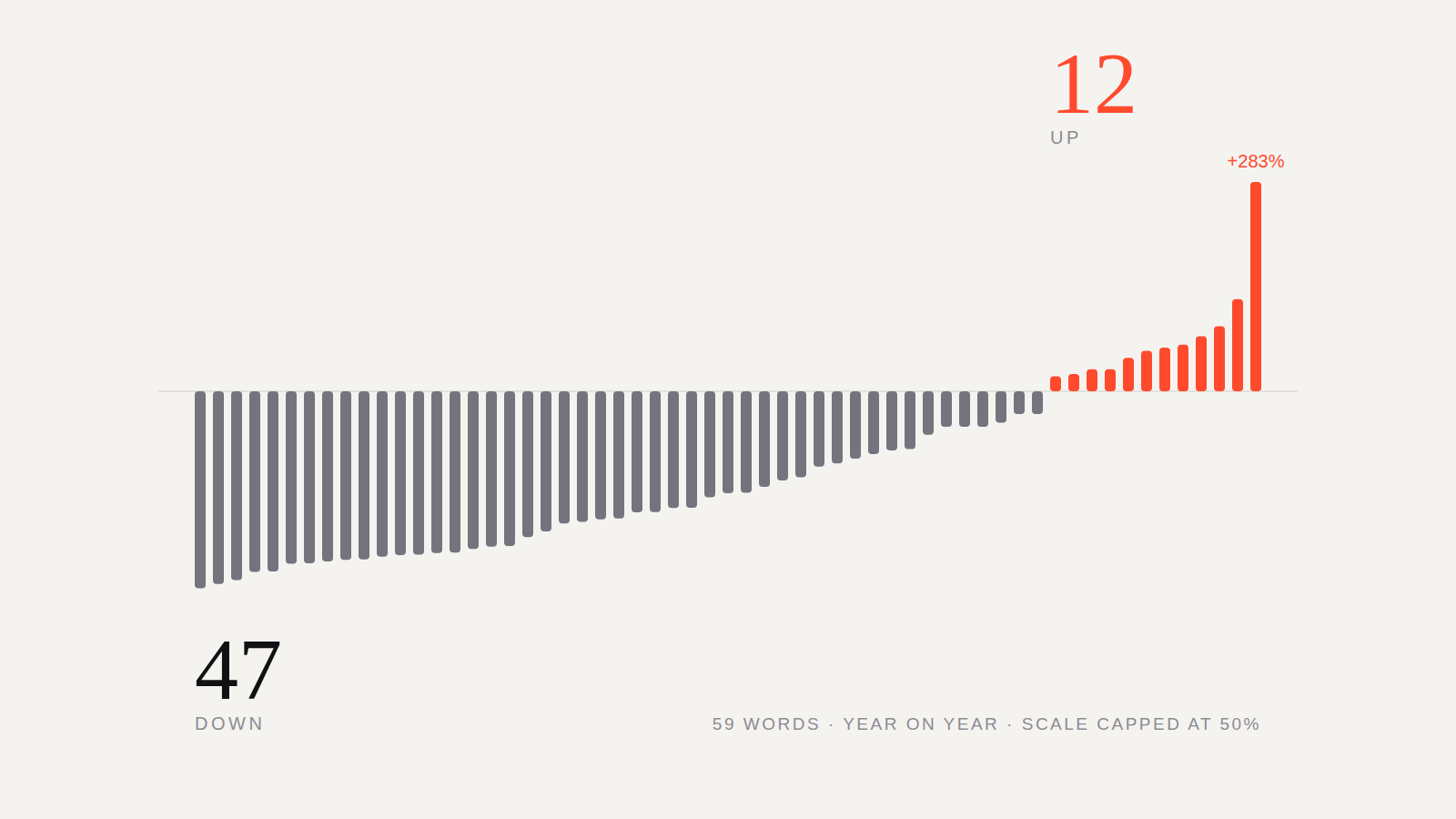
47 of 59 words fell. What rose was almost entirely the names of shops
Every Korean search word this site follows was set against the same month a year earlier. Whatever the field, it was down. Of the 12 words that rose, 10 were the name of a shop or an app. In Korea, the names of things are being searched less.
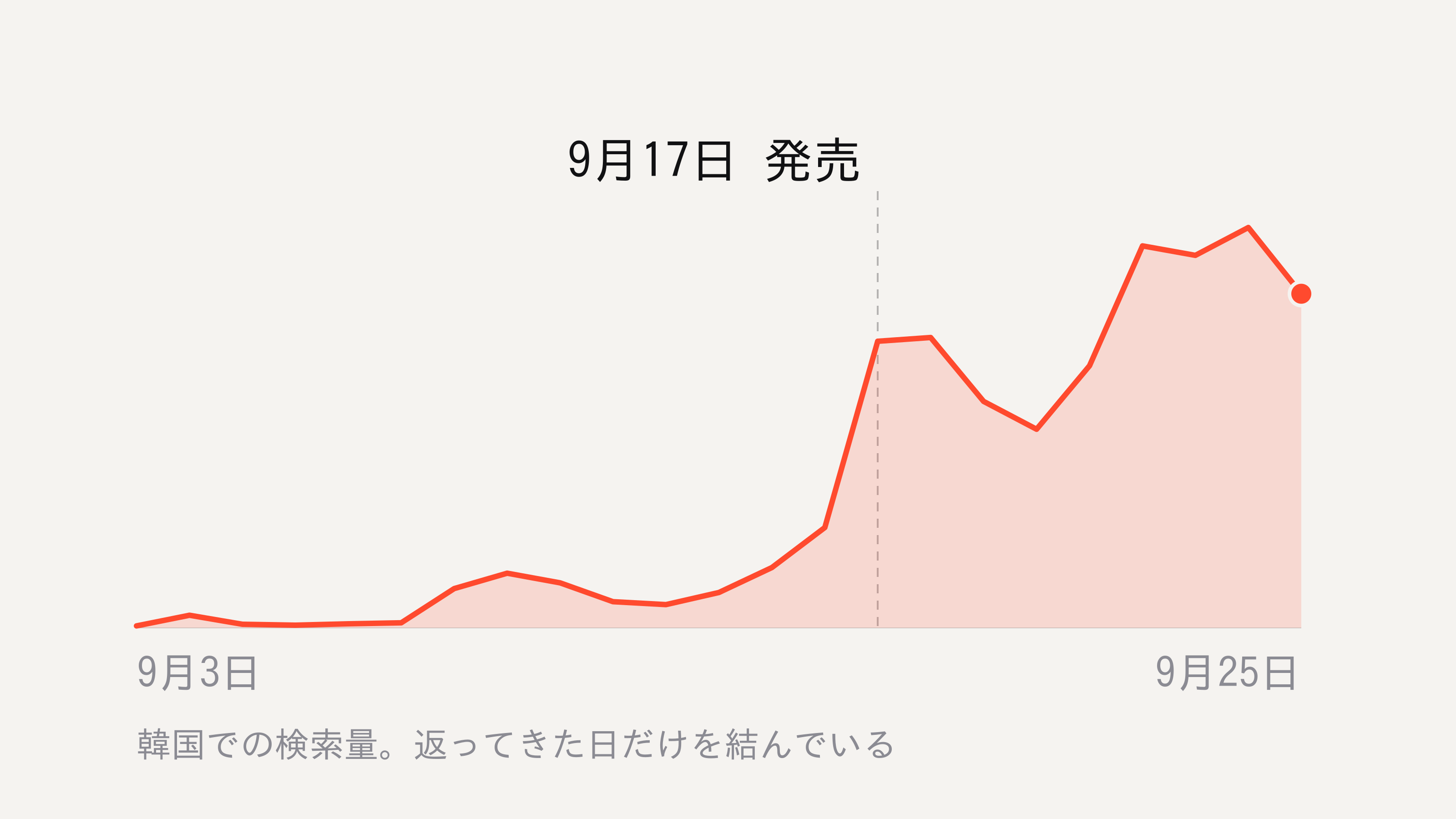
A bread you cannot buy in Korea. What is being sold is not the taste
Searches for the collaboration bread CU released on September 17 were still pointing up on the Korean side through September 25. On the two days when three of the four other words in the same request fell, this one rose 51.5%. The product name gets searched; the photocard gets written about.
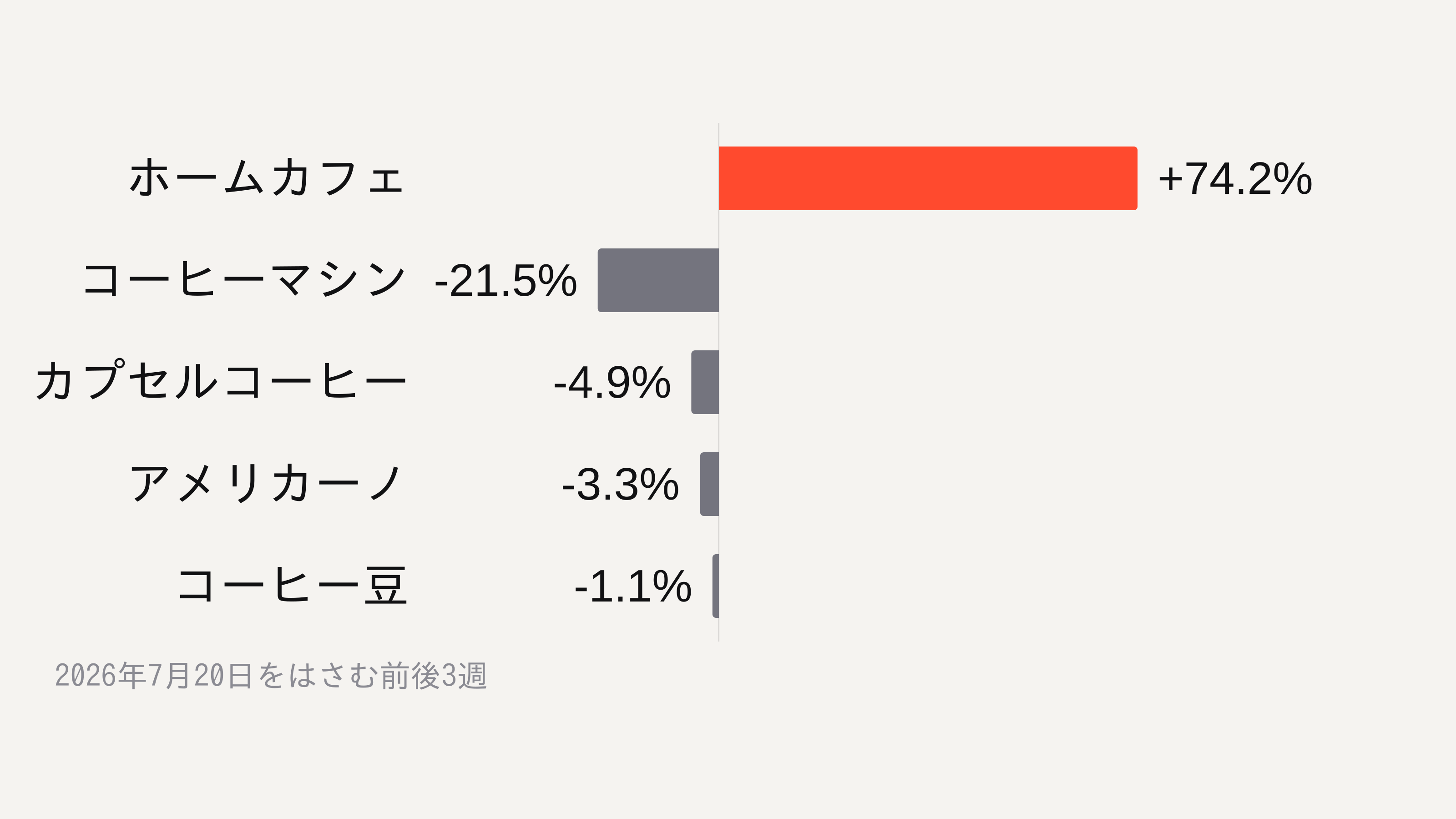
“홈카페” stepped up. On the same date, not one of the tools did
The Korean word 홈카페 moved up a level on July 20, 2026, and 68 days later it has not come back down. Across that same date, not one machine, capsule or bean rose with it. What moved was the word.