Nothing came after glass skin. What disappeared was the worry
Matte is next, velvet is coming — the line has been repeated for years. Measured over two years, velvet returned a figure on 4 days out of 730. What actually halved was pores, tone-up and skin texture: the words for fixing skin.
Glass skin — 유리 피부 — has stood in for Korean skincare for the best part of a decade. A finish that looks wet, a surface that throws light back. Written up abroad, it is still the first thing named.
So has the sequel: matte is next, velvet skin is coming. Two years of search volume say the handover has not happened. Glow has not dropped, and velvet does not appear in the data at all.
Velvet returned a figure on 4 days out of 730
One thing about the data first. When a word falls below a certain volume, search trends do not report it. The day is not returned as zero; the day is missing. So “no figure” means “under the reporting floor,” not “nobody searched.”
벨벳 (velvet) returned a figure on 4 of the 730 days in this window. One day in October 2025, three in November. The other 726 days are below the floor. The word is in articles in several languages, and still not enough people type it to register.
We have watched this shape before. Tracking the crack-open dessert, the explanatory word 뿌셔먹는 sat at nothing for two years while the only thing actually searched was one slang term, 왁뿌. Words added by the people doing the explaining tend to stay words.
Glow has not fallen
If glass skin were being replaced, the glow side should be dropping. It is not.
Glow went from 9.6 to 10.4, slightly up. With every neighbouring word falling, it is the one that did not move. Far from being displaced, it is the steadiest word of the two years.
That +8% is the word measured against itself, same month two years apart. It is not a share of the skincare market and not a count of jars sold. All it says is that as many people type 글로우 now as did then, while the words around it are typed far less.
What fell was not the finish but the flaw
Sort by the size of the fall and the three losers have something in common. Pores down 58%, tone-up down 43%, skin texture down 33%: all three are words for correcting the state of your skin.
- 모공 (pores) is something you want to make less visible
- 톤업 (tone-up) is something you want to make brighter
- 피부결 (skin texture) is something you want to even out
Each starts from the premise that there is a problem with the skin you have. And that premise is tied to being looked at.
Glow is different. It does not correct anything; it names a state you want to be seen in. There is no problem in the premise.
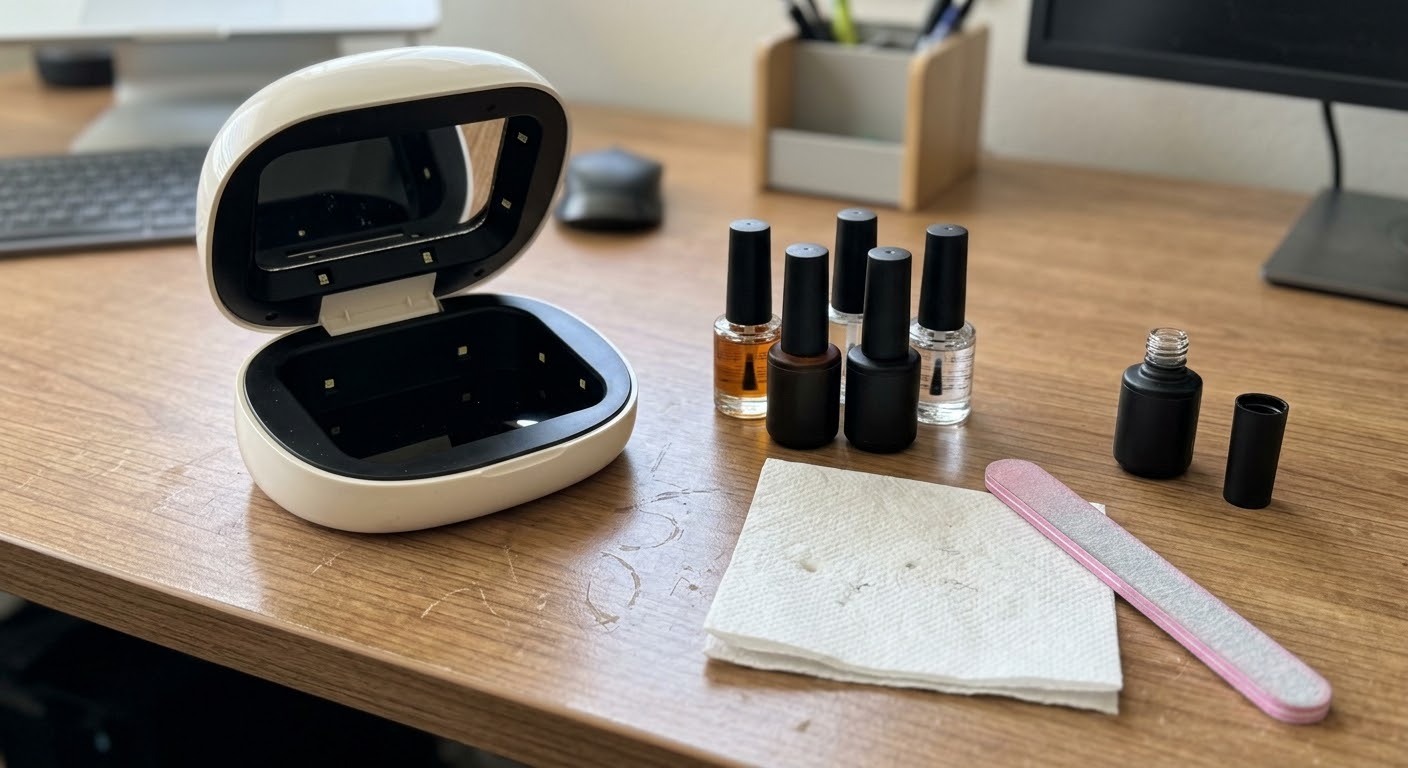
The same pattern shows up outside cosmetics. On Daiso's shelves, nail overtook cosmetics for the first time this summer. Nails are the part you look at all day yourself; a face is the part only other people see. When there are fewer occasions to meet people, the upkeep aimed at other people is cut first — which is the order that pores and tone-up fell in.
There is a second reading worth keeping open. Words like 모공 and 톤업 are also the vocabulary of shopping advice — what you type when you do not yet know which product to buy. As categories settle and people repeat purchases, the problem word gets replaced by a product name, and the search disappears into the brand rather than out of the habit.
Where a “next texture” actually comes from
Velvet shows how a finish trend gets built. The name of a new texture usually appears in articles before it appears in how people shop. A brand launches a line, the line needs describing, the description needs a word, and the articles use it. Consumers start using it afterwards — if they ever do.
The incentives run one way here. A brand that launches into an existing category has to argue on price or on ingredients; a brand that names a new finish gets to open a category with nothing in it yet. So there is always a supply of candidate textures, and most of them stop at the press release.
Which is why the reporting floor is the useful test rather than an inconvenience. A word can be everywhere in the trade press and still not clear the bar at which a search engine will report it. 벨벳 cleared it four times in two years.
The most-watched cosmetics video of the week was about price
Outside search, the same week: new YouTube uploads collected across nine entry words. 화장품 신상 (new cosmetics) returned two, both Daiso new-product reviews, the top one at 342,000 views. That was the most watched of the 25 videos collected that week.
The content is 88 new items run through by price. Not a word about finish. From the same week's new blog titles, 40 words appeared that had not been there before, and not one of them named a skin texture. What came up instead was distribution, manufacturing, pop-up event names and food.
Perhaps the reason no new finish is taking over is that the thing carrying such names — reviews, introductions, the subject matter itself — has moved from texture to price. That is a single week of observation, so it is not even a hypothesis yet. But right now, asking what is happening at a given price point returns more than asking what the next texture is.
When you read that velvet is next, the thing to check is whether the word is being searched in Korea. If it is not, it is still a word rather than a trend.
Did the word go, or did the products go with it
What we hold here is five words about finish and worry. The product side — what is actually selling — is not in this. Lay out what moves on Olive Young's shelves and you can tell whether glow is holding only as language or as inventory too.
Whether products that carry “pores” or “tone-up” in their names are genuinely thinning out can be checked the same way. Did the word disappear, or the products with it. That is the subject the next time we write this one.
The two answers point in opposite directions for a shopper. If only the language moved, the same products are still there under different names and nothing about buying changes. If the products moved, then a whole band of the shelf is being rebuilt, and what is available to buy in two years will not be what is available now.
From the desk. If you are buying Korean skincare, there is not much point hunting for the next finish. What two years of data show is that glow has not moved from where it was.
What is changing is the other side: the products that name a flaw. The shelf space given to pores and tone-up is shrinking, and products in that band are often gone from Korea by the time they arrive elsewhere. If you are buying something to keep, a product named after the finish it gives has better odds of still existing in a few years than one named after the thing it fixes.
Sources
Read next
Related
Korea is painting its own nails
Nails went past cosmetics on the Daiso shelf this summer for the first time. A 2,000-won bottle of gel and a 5,000-won ceiling put the home kit within reach. Searches for salons, though, did not fall. It looks like recession spending, and it is not only that.
“Daiso cosmetics” is not being searched any more. The chain is still growing
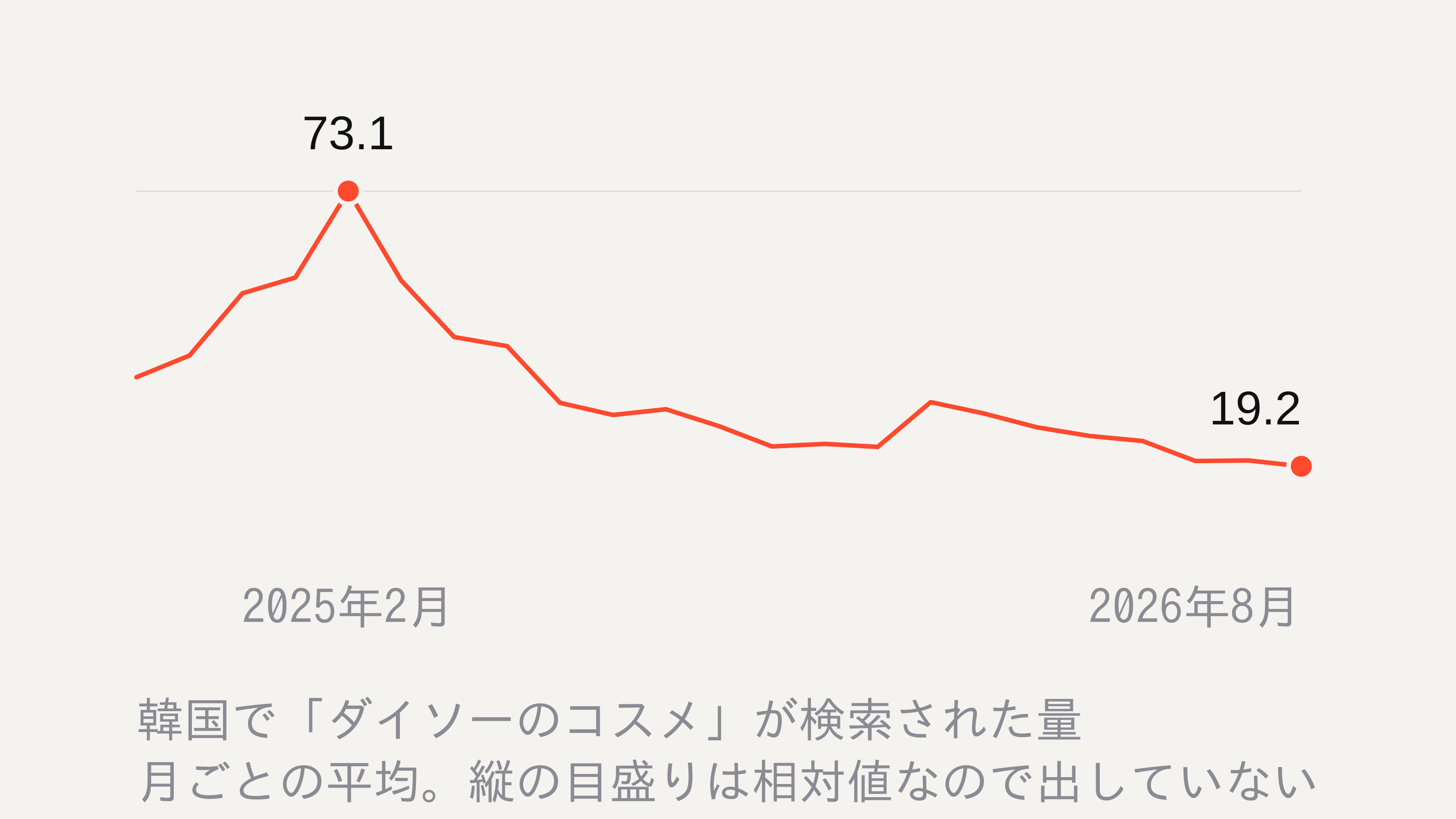
Coverage abroad started calling Korean Daiso's cosmetics remarkable. Two years of Korean search data put the high at February 2025, with today at a quarter of that. It does not mean people got bored.
A bread you cannot buy in Korea. What is being sold is not the taste
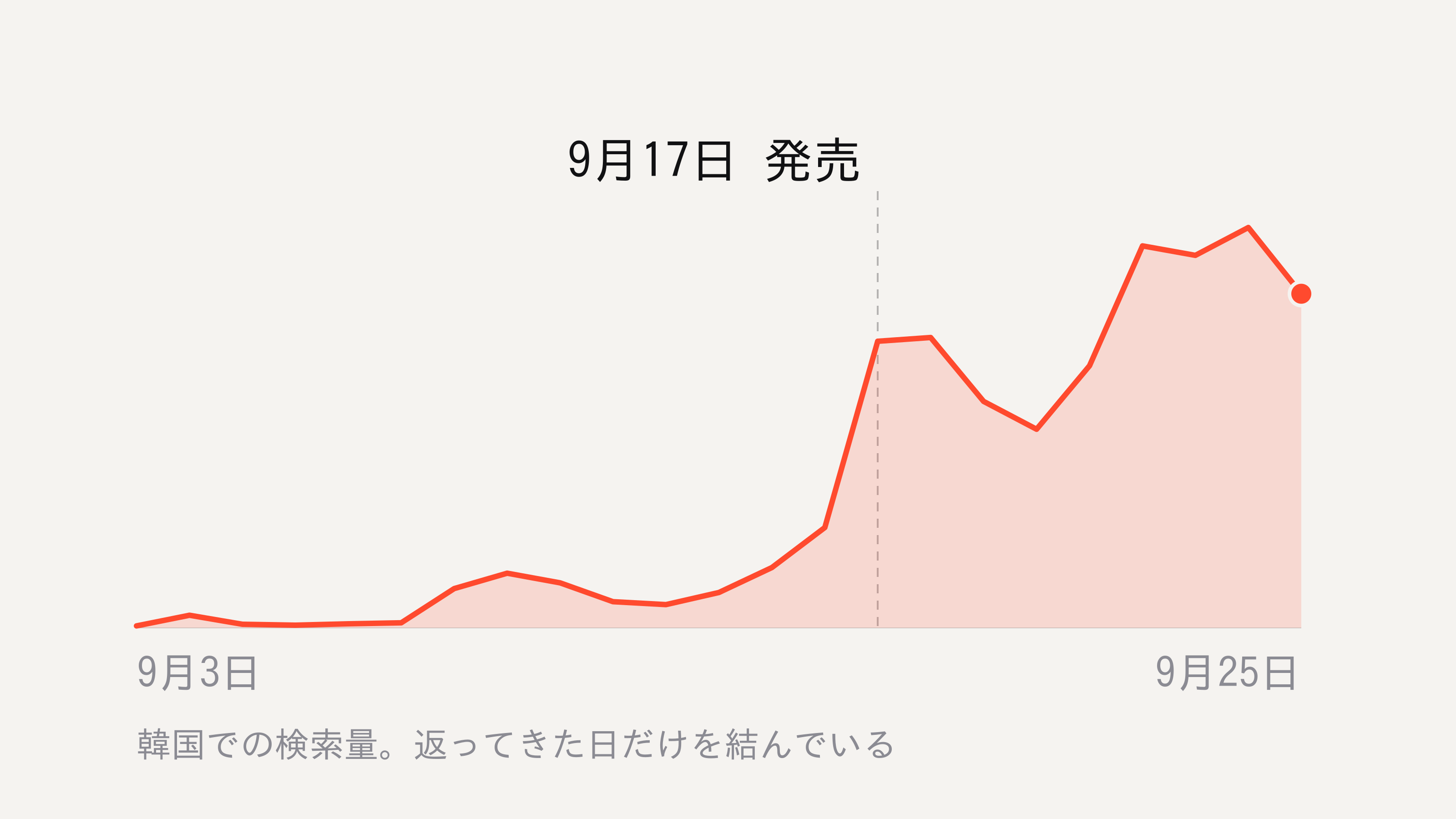
Searches for the collaboration bread CU released on September 17 were still pointing up on the Korean side through September 25. On the two days when three of the four other words in the same request fell, this one rose 51.5%. The product name gets searched; the photocard gets written about.
“홈카페” stepped up. On the same date, not one of the tools did
The Korean word 홈카페 moved up a level on July 20, 2026, and 68 days later it has not come back down. Across that same date, not one machine, capsule or bean rose with it. What moved was the word.