A Korean convenience-store hit takes six months to build and four to erase
Two Korean dessert trends followed end to end, from first sign to gone. Both took six months from lift-off to peak, and four months from the peak back to where they started. Almost the same speed. The stage for both was the convenience store.

Korean convenience stores turn their stock over fast. The shelf changes weekly, and a single chain will put out and withdraw hundreds of products in a year. That has been said for a long time; how fast, in numbers, has rarely been shown.
Over these two years we were able to follow two convenience-store desserts from birth to disappearance. Both had the same shape: six months from lift-off to peak, four months from the peak back to the starting level.
Case one: 두쫀쿠, the Dubai chewy cookie
A marshmallow-textured dough wrapped around kadayif and pistachio cream. It was born in Korea out of the Dubai chocolate that spread worldwide in 2024, with the casing swapped for a chewy rice-cake style dough.
Case two: 왁뿌볼, the crack-open chocolate ball
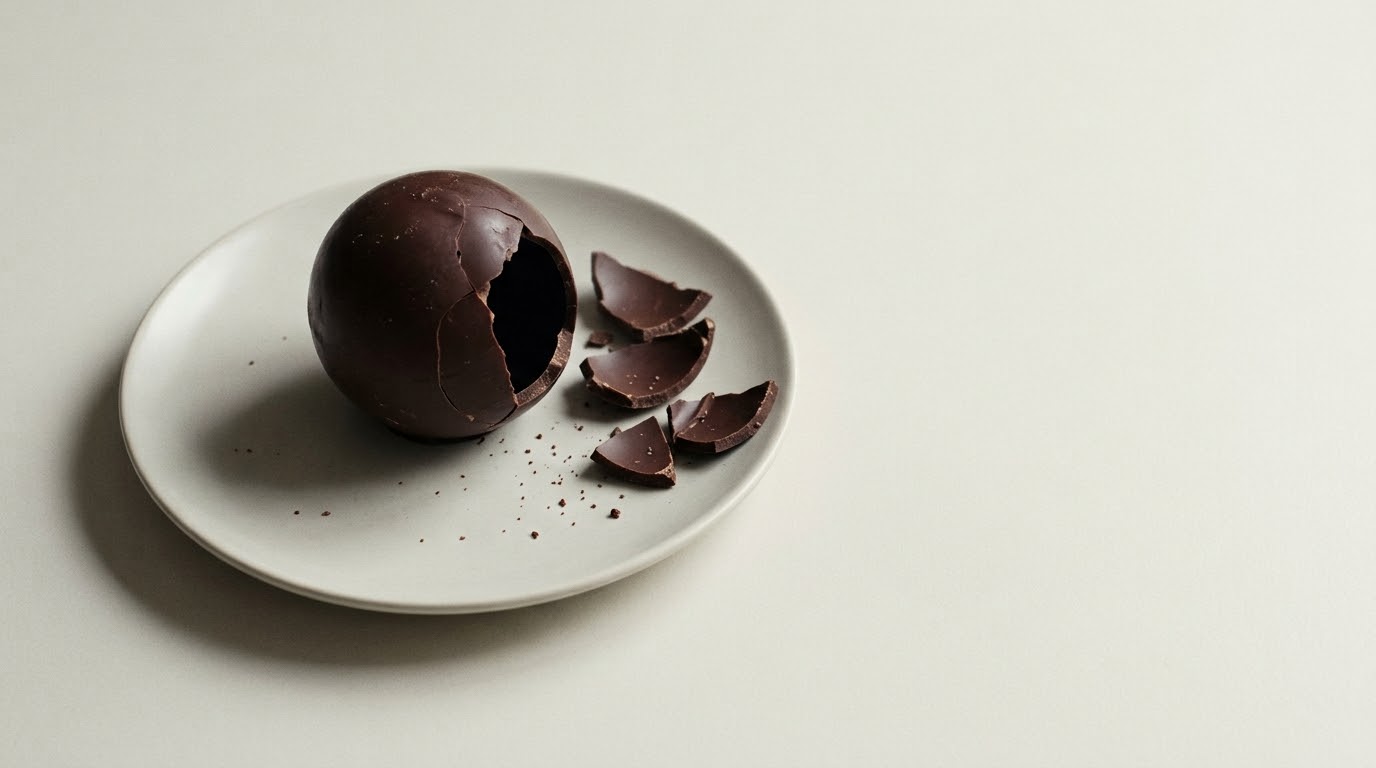
A thick chocolate shell, frozen and then broken apart to eat. 왁뿌 is slang contracted from something like 와그작 뿌셔 — smash it up loudly — and the word did not exist until last autumn.
Both peak in the sixties. The climb and the fall run at almost the same rate. Different product, different season, different maker, and the same curve.
Why the convenience store runs at this speed
Three conditions line up at once.
- The time on shelf is short. Shelf area is fixed, so a new product entering means an old one leaving. If it does not sell it is gone in weeks; if it does sell, the next new product pushes it out anyway
- The price does not get in the way of the decision. At a few thousand won, your hand moves before your judgement does. The interval between hearing about it and buying it is close to zero
- Everyone is looking at the same shelf. The same chain carries the same product nationwide, so a thing seen on social media can be verified near your home the same day. Talk and stock move at the same speed
Those three conditions raise a trend quickly, and they are the same conditions that end it quickly. Once it is off the shelf, it is unbuyable from that day.
A bakery or a dessert café works the other way. A shop that develops its own item decides for itself how long to keep making it, and a queue is an argument for keeping it. A convenience-store item has no such advocate: the shelf plan is set centrally, and the product competes for space against every other new launch that month.
So the curve above is not really a measure of how long people liked something. It is closer to a measure of how long the thing was available to be liked.
Looking for “new arrivals” at all broke in June
Step back from individual products to the phrase 편의점 신상 (convenience-store new arrivals) and something else is going on.
From late 2024 to the summer of 2025 it ran from 8.2 to 13.5. Then a gentle decline, and in June 2026 a single drop from 10.6 to 7.7. Not a slow fade — a break inside one month.
By September it is back to 10.1, so whatever happened in June was not the end of the habit. A phrase that means “show me what is new” does not have a product life cycle of its own; it should move with how many people are in the habit of checking. Those are the two things a single step down can distinguish between, and one month of data cannot.
Searched, but not watched
This phrase has a character that search alone does not reveal. The same week, new YouTube uploads were collected across nine entry words, and the views were summed per entry word.
Last place. One twenty-second of 화장품 신상, which contains the same word 신상 (new arrival), and only three videos came back at all. The most watched had 5,862 views. In search it sits at 10.1, level with Daiso and with convenience stores generally; as video it barely exists.
That is the other side of shelf speed. Something that costs a few thousand won, sits near your home and can be bought today does not need to be watched on someone else's behalf. 편의점 신상 is not a word for watching; it is a word you type before going out. One week of figures, so it cannot be stated as fact.
Cosmetics run the opposite way, which is why the gap is that wide. A jar costs enough that watching someone else open it first is worth the time, and it stays on sale long enough for the video to keep earning views afterwards. The snack is off the shelf before the video would have paid for itself.
Most of the words this site tracks decline gently over two years. A step at a specific month, like this one, is unusual. What happened is not visible in this number alone. It is worth noting that the same June is the month 왁뿌볼 peaked.
Abroad, the same product lands four to six months later
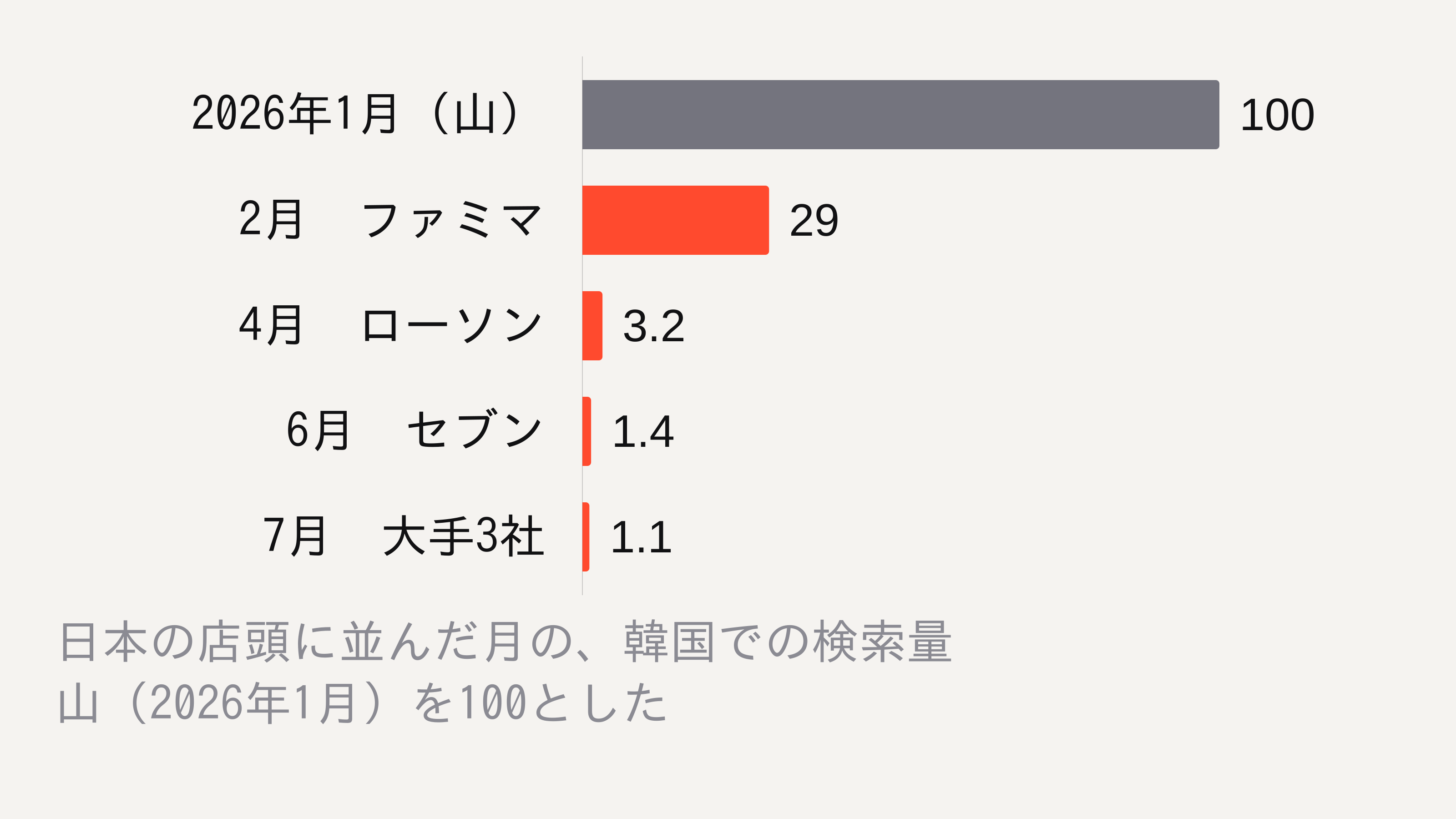
This speed is the premise for anyone following Korean trends from outside. We previously laid out the Japanese release dates for the Dubai-chocolate family. The Korean peak was January 2026; the first product reached Japanese convenience stores on February 24; a product using the Korean name transliterated appeared on June 9.
By that June 9, Korean search volume had fallen to 1.4% of the peak. Sourcing, manufacturing, negotiation and logistics turn directly into that gap.
So a Korean-origin product on a foreign convenience-store shelf is closer to “what Korea has finished with” than to “what Korea is doing.” The shelves do not run at different speeds; the paperwork behind them does.
This is also why the imported version so often arrives under a translated description rather than the Korean name. The name travels through whoever explains it, and the explanation is written after the peak. When the transliterated name finally shows up on a package, it is a sign of how old the trend is, not how current.
How long it was actually bought is a number we do not have
What we hold is how often a thing was searched. Whether the six-up, four-down curve has the same shape in sales is unknown. It is entirely possible that something keeps selling for a while after the searching stops.
We are working on bringing in the category-level transaction figures published by Korea's statistics office. Once those are in, we can show how far the sales peak sits from the search peak. That is where the question of how long a convenience-store trend is actually bought gets answered.
From the desk. If you are looking for new products in a Seoul convenience store, do not go in hunting a specific famous name. A name that has travelled far enough to reach you is likely to be past its peak at home, and may already be off the shelf.
It is faster to walk the aisles reading the 신상 (new arrival) tags at the shelf edge. They turn over weekly, so going twice during a stay shows you two different sets. Whatever is lifting off in Korea right now either has no name yet or has one that has not been translated. Seeing that first is what standing in front of the actual shelf is worth.
Sources
Read next
Related
Japan was not late. The shelf was
Korean trends are supposed to reach Japan after a delay. Tested against the data, the gap in finding out was next to nothing; what lagged was the date the product reached the shelf. By the time it did, Korean search volume was at 1.4% of its peak.
The chocolate you crack open has already passed its peak in Korea
A thick chocolate shell you break apart with your hands. In Korea it is called 왁뿌 (wakppu). Checked against Korean search volume, the peak was three months ago. By the time the trend is written up abroad, the country has moved on.
A bread you cannot buy in Korea. What is being sold is not the taste
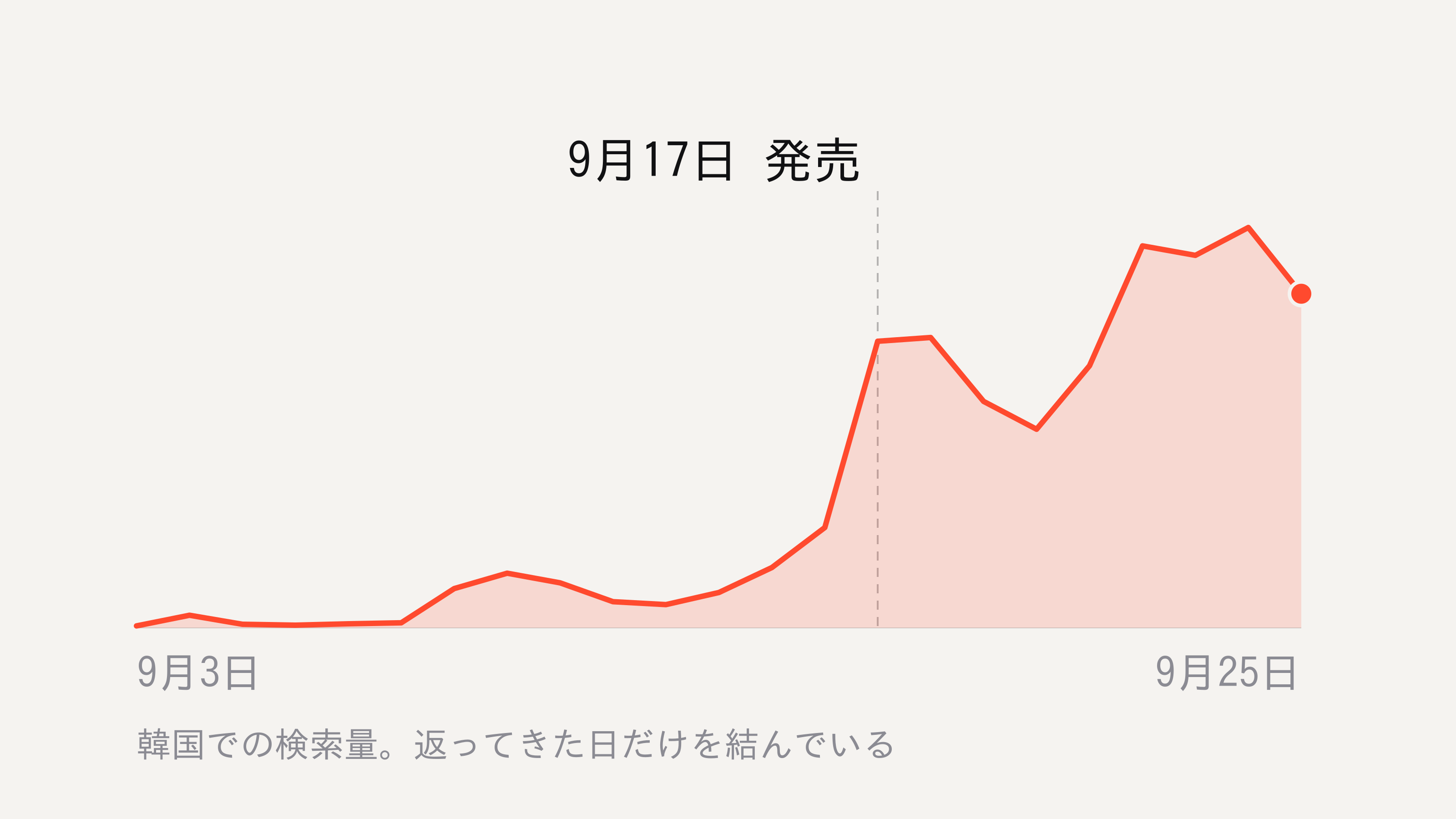
Searches for the collaboration bread CU released on September 17 were still pointing up on the Korean side through September 25. On the two days when three of the four other words in the same request fell, this one rose 51.5%. The product name gets searched; the photocard gets written about.